- Why Resolution Audiences Are Different from Regular Interest Targeting?
- What Are the Top New Year’s Resolutions for 2026?
- How much do people spend on New Year’s Resolutions?
- What Are New Year’s Resolutions Audiences?
- Why Access to The Right Audience Data Matters for New Year’s Resolution Campaigns?
- How to reach New Year’s resolution audiences that convert?
- Launch The Campaign in the Right Time
- Why OnAudience New Year’s Resolution Audiences Convert in Early January?
- Custom New Year's Resolution Audiences
- FAQ
Every January, people hit “reset” and they’re willing to spend money to do it. In the US, 42% of Americans plan to set New Year’s resolutions for 2026, and those resolution-setters expect to spend an average of $4,700 to achieve their goals; 55% say their resolutions are financial budgeting, saving, investing, paying down debt, etc.
In the UK, about one in five 19% say they plan to make New Year’s resolution and the most common goals are:
- get fit and exercise more 23%,
- lose weight 17%, and eat more healthily 11%
- save or spend less 7%.
Launch Resolution-Driven Campaigns
Why Resolution Audiences Are Different from Regular Interest Targeting?
A New Year’s resolution audience is not “people who like fitness” or “people interested in finance.” It’s people showing fresh-start intent, a short and high-value window where they’re actively planning changes, comparing options, and starting new routines.
That intent behaves differently from evergreen interest targeting:
- Time is compressed – It spikes fast, late December – early January, which means you need to know what people are showing interest and intent at this moment of the year.
- Momentum changes quickly – It shifts week-by-week – planning, taking action and dropping the idea off, which means you need to act immediately to get the best campaign results.
- Intent spans multiple categories – Resolution goals cut across areas like fitness, meal planning, budgeting, and productivity—so you need access to a wide pool of relevant audience segments.
It is important to note that If you treat it like a broad interest pool, you’ll scale spend, but you won’t scale outcomes.
What Are the Top New Year’s Resolutions for 2026?
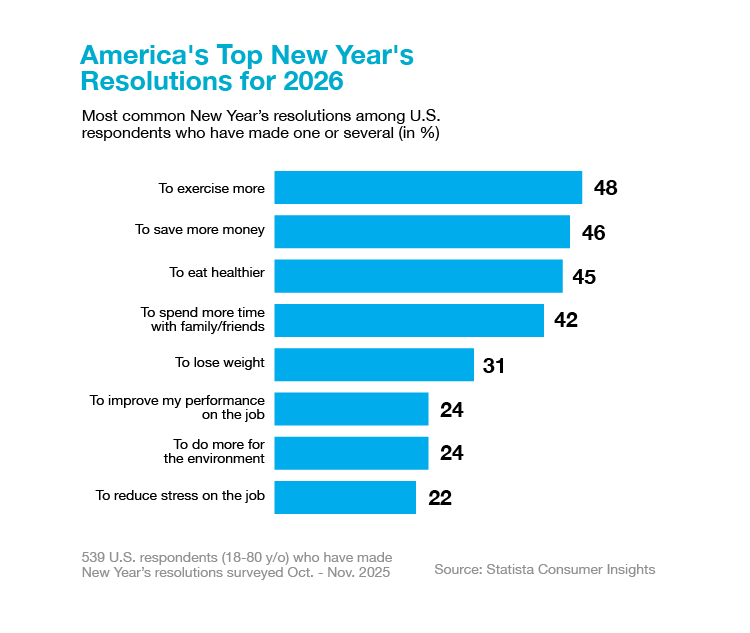
According to the Statista that run a survey for 2026 on 539 U.S. respondents aged 18-80, the most common New Year’s resolutions cluster around a few clear themes: health (exercising more, eating healthier, and losing weight), money (saving more), and relationships (spending more time with family and friends).
Beyond these classic goals, many people also set resolutions tied to everyday pressures and values like improving performance at work, reducing stress on the job, and doing more for the environment, showing that 2026 goal-setting isn’t just about self-improvement, but also about feeling more in control at work and living a bit more intentionally.
How much do people spend on New Year’s Resolutions?
It is hard to throw an exact number when it comes about New Year’s resolutions but in the U.S. benchmarks for 2026, people who plan to make resolutions say they expect to spend about $4,700 over the year to achieve them. In the same CIT Bank survey run by The Harris Poll, men expected $5,360 vs women $4,000, and the highest-spending group was men 35–54 at $6,000.
In practice, the budget really depends on the type of resolution: fitness seekers might spend on a gym membership, classes, a trainer, or gear. The finance-focused resolvers may put money into budgeting tools, courses, or professional advice to stay on track.
Experience seekers often allocate the biggest share to lifestyle upgrades like travel, hobbies, events, or learning new skills that costs can add up quickly depending on how ambitious the goal is.
What Are New Year’s Resolutions Audiences?
New Year’s resolutions audiences are people in a “fresh start” mindset, they’re actively planning changes and are more likely to try new tools, routines, and services that help them stick to a goal in the long term.
Fitness Starters
Who: People starting (or restarting) a routine and choosing gym vs home vs classes.
Best campaigns:
- Beginner memberships/classes
- Starter gear bundles (mat + bands)
- Home equipment
- Wearables/apps
- Free trial/first month
Healthy Eating Planners
Who: People who want simple structure for healthier meals that fits real life.
Best campaigns:
- Meal kits
- “Pantry reset” grocery bundles
- Meal prep guides/recipes
- Nutrition coaching
- Macro/calorie tracking apps
- High-protein quick foods
Budget Reset
Who: People regaining control after holiday spending and looking for quick wins.
Best campaigns:
- Budgeting apps/tools
- Subscription management
- Cashback/rewards + savings automation
- Price comparison/deal alerts
- Saving challenges
Debt Paydown
Who: People reducing debt/interest and improving credit, often needing a clear plan.
Best campaigns:
- Consolidation or balance transfer (where relevant)
- Credit monitoring
- Payoff calculators/planners
- Step-by-step repayment programs
- Confidence-building education
Productivity Reset
Who: People trying to get organized across work, routines, and time management.
Best campaigns:
- Digital planners/to-do tools
- Habit trackers
- Focus apps (Pomodoro/blockers/time tracking)
- Home organization kits
- Ready-to-use templates
Skill Builders
Who: People investing in self-improvement (career, language, certifications) with steady progress.
Best campaigns:
- Language apps
- Certification courses
- Training bundles
- CV/interview/portfolio tools
- Outcome-led messaging + streaks/milestones
Experience Seekers
Who: People planning their first trips, events, and “do more” moments of the year.
Best campaigns:
- City breaks/weekend deals
- Early-bird travel packages
- Tickets (concerts/festivals/sports/culture)
- Outdoor/adventure trips + gear
- Local “things to do”
- Memberships/perks
- Simple planning tools (itineraries/packing lists)
Why Access to The Right Audience Data Matters for New Year’s Resolution Campaigns?
New Year’s resolution audiences move fast, and they don’t fit into one simple interest category. To win in that short window, you need access to high-quality audience data that helps you identify real fresh-start intent, reach the right people before competitors do, and scale without turning your campaign into broad, inefficient targeting.
With the right data, you can:
- Capture fresh-start intent early (late Dec–early Jan) with resolution-ready segments before competition peaks.
- Avoid broad “interest” waste and target audiences built on intent signals (in-market, purchase intent, category engagement).
- Activate across devices (desktop, mobile, CTV/OTT) so you don’t lose users as they switch screens.
- Cover multiple resolution themes make sure to use data that offers various segments such as fitness, healthy eating, finance, productivity, learning, travel/experiences.
- Optimize faster with clearer segment performance readouts so the budget goes to audiences that lift CPA/ROAS, not just deliver impressions.
How to reach New Year’s resolution audiences that convert?
New Year’s resolution audiences convert best when you meet them at the exact moment they’re ready to change and when your targeting reflects real intent, not broad “interest” labels.
Here is some practical advice to reach high-motivation users, scale safely, and turn that fresh-start window into measurable conversions:
- Choose the right segment objective – Start with real intent audience data, not generic interests, instead of targeting “fitness fans” or “people into finance,” focus on users who are actively researching, comparing, and planning right now, reading guides, looking up programs, checking prices, or searching for tools that help them change a habit.
- Scale in layers – Begin with your strongest, most high-intent segments, then expand to closely related behaviors like interest, demography and events or create a unique custom audiences from brief to grow reach while keeping audience quality.
- Stay with people across screens – Resolution research and decisions happen everywhere on mobile,desktop, and CTV/OTT, so cross-device activation helps you keep reach and frequency consistent as users switch devices throughout the day..
- Retarget quickly while motivation is high – Fresh-start intent fades fast, so keep retargeting windows short (around 3–14 days) and use different creatives and clear “next step” messages like free trials, starter bundles, and limited-time offers.
Launch The Campaign in the Right Time
New Year’s resolution intent doesn’t show up all at once, it follows a predictable rhythm: people plan in late December, take action in early January, and then need support to stay consistent as motivation dips.
Use the timeline below to align your targeting, messaging, and budget shifts with how people actually behave:
- Dec 15–31: capture planners (but don’t expect peak purchasing yet).
People start thinking about change: browsing, saving ideas, comparing brands, and building a shortlist. Use this window to educate and pre-qualify demand with simple explainers, “how it works” content, comparison messaging, lead-gen, and free trials, so you’re the obvious choice when they’re ready to act.
- Jan 1–14: push for action and conversion (the real “doing” phase).
This is when resolutions move from intention to behavior—and when people are most likely to buy, sign up, or commit (often from Jan 1–3 and into the first full workweek). Shift budget toward strong offers, low-friction sign-up flows, and conversion-first creative that makes starting feel easy.
- Jan 15–Feb: focus on staying consistent (retention wins).
Motivation starts to dip around mid-January, so switch to habit-support messaging: reminders, progress tracking, streaks, “keep going” bundles, and reactivation campaigns that help people stick to what they started.
Why OnAudience New Year’s Resolution Audiences Convert in Early January?
Launching your New Year’s resolution campaigns in early January (instead of spending heavily earlier) helps you reach people at the exact moment they shift from “planning” to actually buying and signing up—Jan 1–14 is when motivation is highest and decisions happen fast.
With OnAudience New Year’s Resolution audiences, you’re not guessing based on broad interests like “fitness fans”; you’re activating segments built on up-to-date intent signals that give you the highest probability of converting. These are users who have been researching, comparing options, and checking prices and now they’re ready to take action.
Custom New Year’s Resolution Audiences
Need a custom New Year’s Resolutions audience? Build it with AI Audiences
Not every resolutions campaign fits a standard label. If you need something specific like:
-
“Gym-joiners researching memberships + fitness apps”
-
“Wearable-first health trackers who also shop smartwatches/smart rings”
-
“Meal-prep & weight-loss planners browsing recipes, grocery delivery, and supplements”
Use AI Audiences to create tailored segments fast — free, privacy-first, and ready to upload to your activation platform.
FAQ
What is a New Year’s resolution audience?
A New Year’s resolution audience is users in a “fresh start” mindset—actively planning, comparing, and starting routines (fitness, budgeting, productivity, learning, healthier eating, experiences), not just people with broad interests.
Why do intent-based segments outperform generic interests in January?
The window is short and behavior changes fast: planners research in late December, action peaks in early January, and motivation softens mid-January—broad interests miss that timing and dilute outcomes.
When should I launch New Year’s resolution campaigns?
Start Dec 15–31 to capture planners early, then shift budget to conversion during Jan 1–14, and move into retention/consistency messaging from Jan 15–Feb.
What are the top New Year’s resolutions for 2026?
They cluster around health (exercise/eating), money (saving/budgeting), and relationships/time with others, plus work performance, stress reduction, and values-based goals like environmental impact.
How much do people spend on New Year’s resolutions?
Spend varies by goal, but the U.S. benchmark where resolution-setters expect to spend around $4,700 over the year (with differences by gender/age).
What audience segments work best for New Year targeting?
High-performing options include Fitness Starters, Healthy Eating Planners, Budget Reset, Debt Paydown, Productivity Reset, Skill Builders, and Experience Seekers, built around intent signals, not broad affinities.
How do I scale New Year campaigns without losing performance?
Scale in layers: start with your strongest high-intent segments, expand to adjacent behaviors/demographics/events, and use custom-built audiences from a brief (by OnAudience ai.onaudience.com ) to grow reach while protecting quality.
What retargeting window works best during resolution season?
Keep it short—3–14 days—because fresh-start motivation fades quickly. Use clear “next step” creative like trials, starter bundles, and limited-time offers.
Why does cross-device activation matter for resolution audiences?
Resolution research and decision-making happens across mobile, desktop, and CTV/OTT—cross-device activation helps maintain reach and consistent frequency as users switch screens.